
Ekart PCM Explained is a term that’s been quietly gaining attention in logistics, supply chain discussions, and tech-enabled delivery systems. While it may sound technical at first glance, ekart pcm actually sits at the intersection of smart logistics, process control, and modern fulfillment strategies. As e-commerce continues to grow at an aggressive pace, systems like ekart pcm are becoming essential rather than optional.
In simple terms, ekart pcm can be understood as a structured framework that helps manage processes, communication, and movement within a large-scale delivery ecosystem. It focuses on precision, monitoring, and efficiency—three pillars that modern logistics simply cannot function without. Whether it’s managing last-mile delivery or optimizing warehouse coordination, ekart pcm plays a behind-the-scenes role that directly impacts customer satisfaction.
This article breaks down Ekart PCM Explained a clear and approachable way. We’ll explore what it means, how it functions, where it’s used, and why it has become such an important concept in today’s logistics-driven world.
What Is Ekart PCM? Understanding the Core Concept
At its core, Ekart PCM Explained refers to a process and control mechanism used within logistics operations to ensure smooth coordination between systems, people, and delivery workflows. The “PCM” aspect often relates to process control and management, emphasizing structured oversight rather than manual guesswork. This allows operations to scale without collapsing under complexity.
Ekart pcm is not a single tool or software; instead, it’s a combination of methodologies, digital tracking, and operational standards. It ensures that packages move from point A to point B with minimal delays, reduced errors, and consistent communication across teams. In fast-moving fulfillment environments, this level of control is critical.
What makes Ekart PCM Explained especially valuable is its adaptability. It can be implemented across various logistics layers—warehousing, sorting hubs, transportation routes, and last-mile delivery. This flexibility allows companies to fine-tune performance without overhauling their entire infrastructure.
How Ekart PCM Explained Works in Real-World Logistics Operations
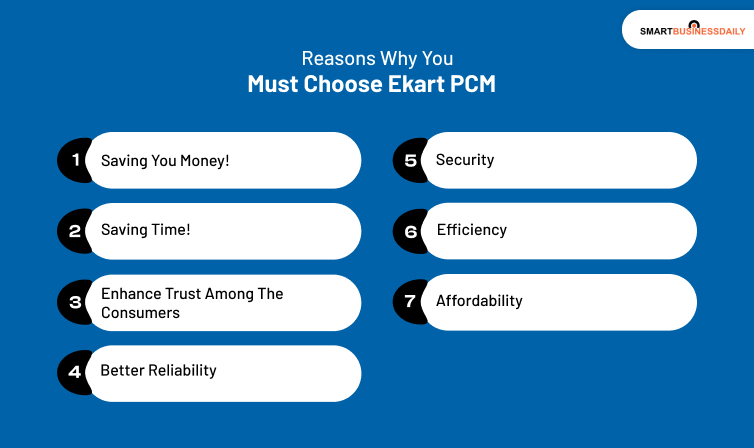
Ekart PCM Explained works by integrating data flow, operational checkpoints, and performance monitoring into one cohesive system. Every stage of the logistics chain is assigned measurable parameters, ensuring transparency and accountability. This makes it easier to identify bottlenecks before they turn into major delays.
One of the key strengths of ekart pcm is real-time visibility. As packages move through the system, their status is continuously updated and shared across internal platforms. This reduces confusion, minimizes misrouting, and allows customer service teams to provide accurate updates without relying on guesswork.
Another important aspect is exception handling. When something goes wrong—such as a delayed shipment or incorrect routing—ekart pcm frameworks trigger predefined responses. Instead of chaos, the system flags issues early and directs teams toward resolution, saving both time and resources.
The Role of Ekart PCM Explained in E-Commerce Growth
E-commerce growth has created massive pressure on logistics networks. Faster delivery expectations, higher order volumes, and tighter margins leave little room for inefficiency. Ekart PCM Explained helps e-commerce operations keep up with this demand by standardizing processes at scale.
With ekart pcm in place, fulfillment centers can process thousands of orders daily while maintaining accuracy. Picking, packing, sorting, and dispatching become synchronized operations rather than isolated tasks. This harmony significantly reduces delivery errors and improves turnaround times.
From a customer perspective, Ekart PCM Explained indirectly improves trust. Faster deliveries, fewer lost packages, and consistent tracking updates all stem from strong process control. As competition in e-commerce intensifies, these factors often determine whether a customer returns or switches platforms.
Ekart PCM Explained and Technology Integration
Technology is the backbone of ekart pcm systems. Data analytics, automation tools, and cloud-based platforms work together to provide a single source of truth. This technological foundation ensures that decisions are data-driven rather than reactive.
Automation plays a major role here. Sorting systems, barcode scanning, and route optimization tools feed real-time information into the ekart pcm framework. This reduces manual intervention, cuts labor costs, and improves overall accuracy across operations.
Additionally, analytics dashboards help leadership teams track performance metrics such as delivery time, failure rates, and operational costs. With ekart pcm, these insights aren’t just reports—they’re actionable intelligence that guides strategic decisions.
Benefits of Ekart PCM Explained for Businesses and Operations
One of the biggest benefits of ekart pcm is operational efficiency. By eliminating redundant steps and streamlining workflows, businesses can do more with fewer resources. This is especially important in high-volume logistics environments where even small inefficiencies multiply quickly.
Another major advantage is scalability. As order volumes increase, ekart pcm frameworks allow operations to grow without losing control. New hubs, routes, and teams can be integrated smoothly because standardized processes are already in place.
Cost optimization is another strong point. Fewer errors mean fewer returns, reships, and customer complaints. Over time, this translates into significant savings and improved profit margins, making ekart pcm a long-term investment rather than a short-term fix.
Challenges and Limitations of Ekart PCM
Despite its advantages, ekart pcm is not without challenges. Implementation requires planning, training, and alignment across departments. Without proper onboarding, teams may resist structured processes, reducing the system’s effectiveness.
Another limitation is dependency on data accuracy. Ekart pcm systems rely heavily on real-time data inputs. If information is incorrect or delayed, decision-making suffers. This makes data discipline and system maintenance absolutely essential.
There is also an upfront cost factor. While ekart pcm delivers long-term savings, initial investments in technology and training can be significant. However, most organizations find that the long-term benefits outweigh these early expenses.
The Future of Ekart PCM in Modern Logistics
The future of Ekart PCM Explained closely tied to automation and artificial intelligence. Predictive analytics will allow systems to anticipate delays before they happen, while AI-driven routing will further optimize delivery timelines.
As sustainability becomes a bigger focus, ekart pcm frameworks are also expected to incorporate eco-friendly metrics. Optimized routes, reduced fuel consumption, and smarter packaging decisions will all play a role in greener logistics operations.
Ultimately, ekart pcm will continue evolving as customer expectations rise. Same-day delivery, hyper-local fulfillment, and personalized delivery experiences will all rely on strong process control systems to function smoothly.
Why Ekart PCM Matters More Than Ever
In today’s fast-paced delivery economy, logistics is no longer just a backend function—it’s a competitive advantage. Ekart pcm ensures that operations remain reliable, scalable, and customer-focused even as demand grows.
Businesses that adopt structured frameworks like ekart pcm position themselves for long-term success. They gain visibility, control, and adaptability, which are crucial in an industry where change is constant.
In the end, ekart pcm isn’t just about moving packages. It’s about building a system that supports growth, efficiency, and trust—three things no modern logistics operation can afford to ignore.